
- Template item
Search engine optimization (SEO) and pay-per-click (PPC) advertising sit at the heart of every digital marketing strategy. Most businesses use one (or both) to attract customers, boost visibility, and drive traffic to their websites.
But some people ask: which one actually works better?
For startups and growing brands, the answer isn’t simple. It depends on your goals, marketing budget, and how quickly you need results. Some companies rely on organic search to build trust over time, while others lean on paid search for immediate visibility and measurable returns.
To help you decide what’s right for your business, I’m breaking down what you need to know about SEO and PPC in this article. You’ll learn:
- What SEO and PPC are
- The differences between SEO and PPC
- When to use SEO, PPC, or both
- Common mistakes to avoid when using SEO or PPC
- When to use MarketerHire to hire an SEO or PPC expert
What is SEO?
SEO (search engine optimization) is the process of improving your site content so it ranks higher on search engines like Google.
When someone searches for something online—say, “best project management tools for startups”—the articles and websites that appear on the first page didn’t get there by luck. They got there through SEO.
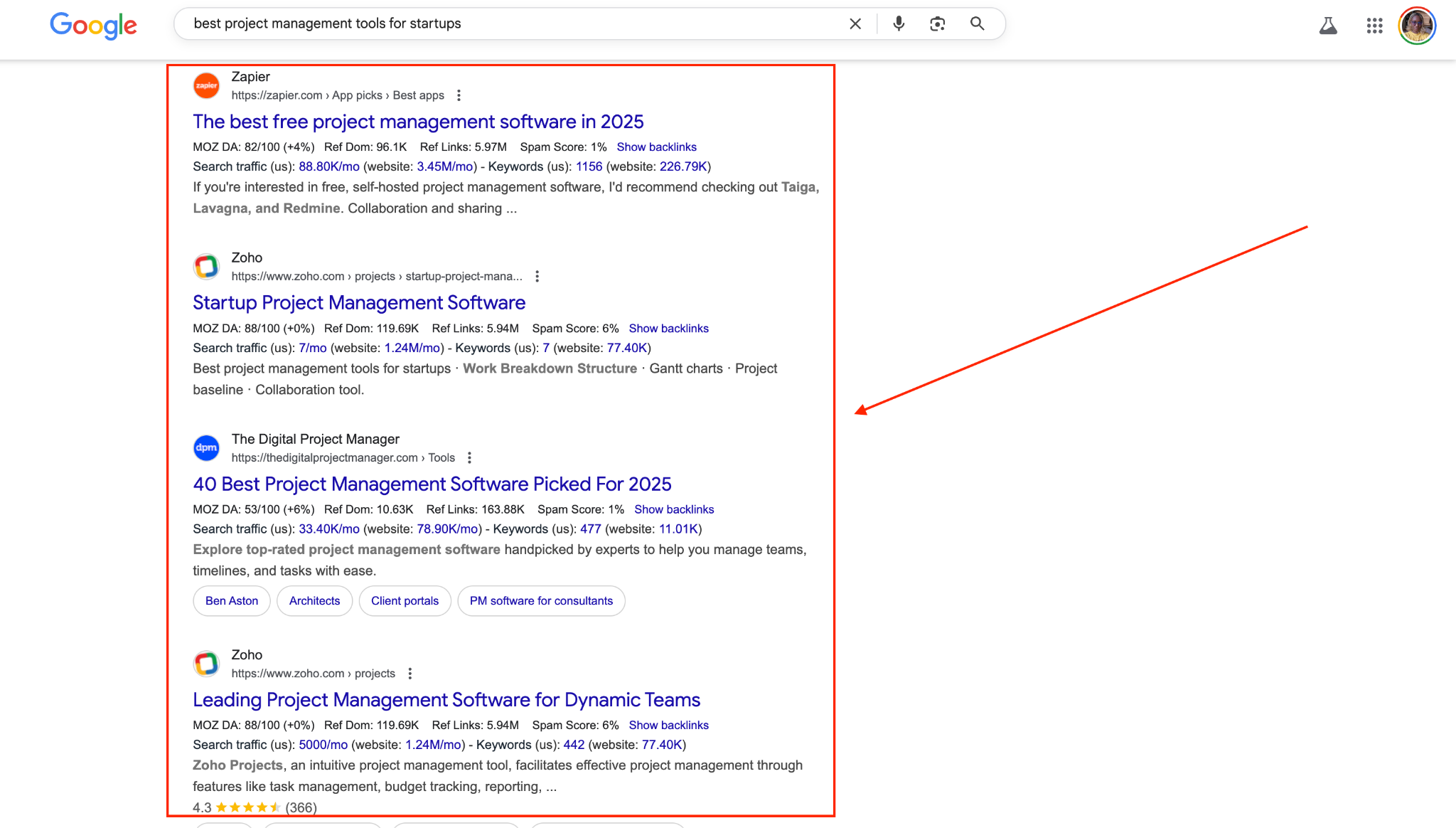
The goal of SEO is to help your business appear where your target audience is already looking. It focuses on attracting organic traffic, which means visitors who find you naturally through organic search results instead of paid ads.
The thing with SEO is that it takes time. You won’t see results overnight.
In fact, it can take anywhere from three to six months to notice meaningful growth, depending on your competition, keyword targeting, and how often you publish quality content. That’s because Google’s algorithms need time to crawl your website’s content, understand what it’s about, and decide how relevant it is to users’ search queries.
The upside, however, is that once your site starts ranking, it keeps driving qualified traffic for months or even years, without you paying for every click. You’ll only need to invest in content creation, optimization, and occasional technical updates to maintain your organic rankings.
The four main types of SEO
There are four different types of SEO, including:
1. On-page SEO
This focuses on optimizing elements that live on your website. It involves finding the right keywords (keyword research), using those keywords naturally in your content (blog posts, landing pages, guides, etc.), writing strong titles and meta descriptions, using images and alt texts, and adding internal links.
For example, if you run a SaaS company, optimizing your blog post about “automated billing systems” with relevant keywords and clear headings helps Google understand your topic, so it can rank you higher on the search engine results pages (SERPs).
2. Off-page SEO
Off-page SEO happens outside your website, and it focuses on building credibility and authority through backlinks from other trusted sites.
Think of it as digital word-of-mouth. When other reputable websites link to your article or mention your brand, Google takes it as a signal that your content is trustworthy.
For example, if a top marketing blog links to your post, that boosts your reputation and helps you rank higher in the Google SERP, which is especially important if your website is new.
3. Technical SEO
Technical SEO focuses on making sure your website runs smoothly and is easy for search engines to understand. It covers things like site speed, mobile friendliness, and structured data.
A slow website or broken links can hurt your performance. For example, if your site takes more than a few seconds to load, users might leave before it even appears, which can lower your rankings. Technical SEO helps increase speed, so search engines rank your content and people find it and have a good experience on it.
4. Local SEO
Local SEO helps businesses show up in searches within a specific area/region. It’s especially useful for brick-and-mortar stores or service providers.
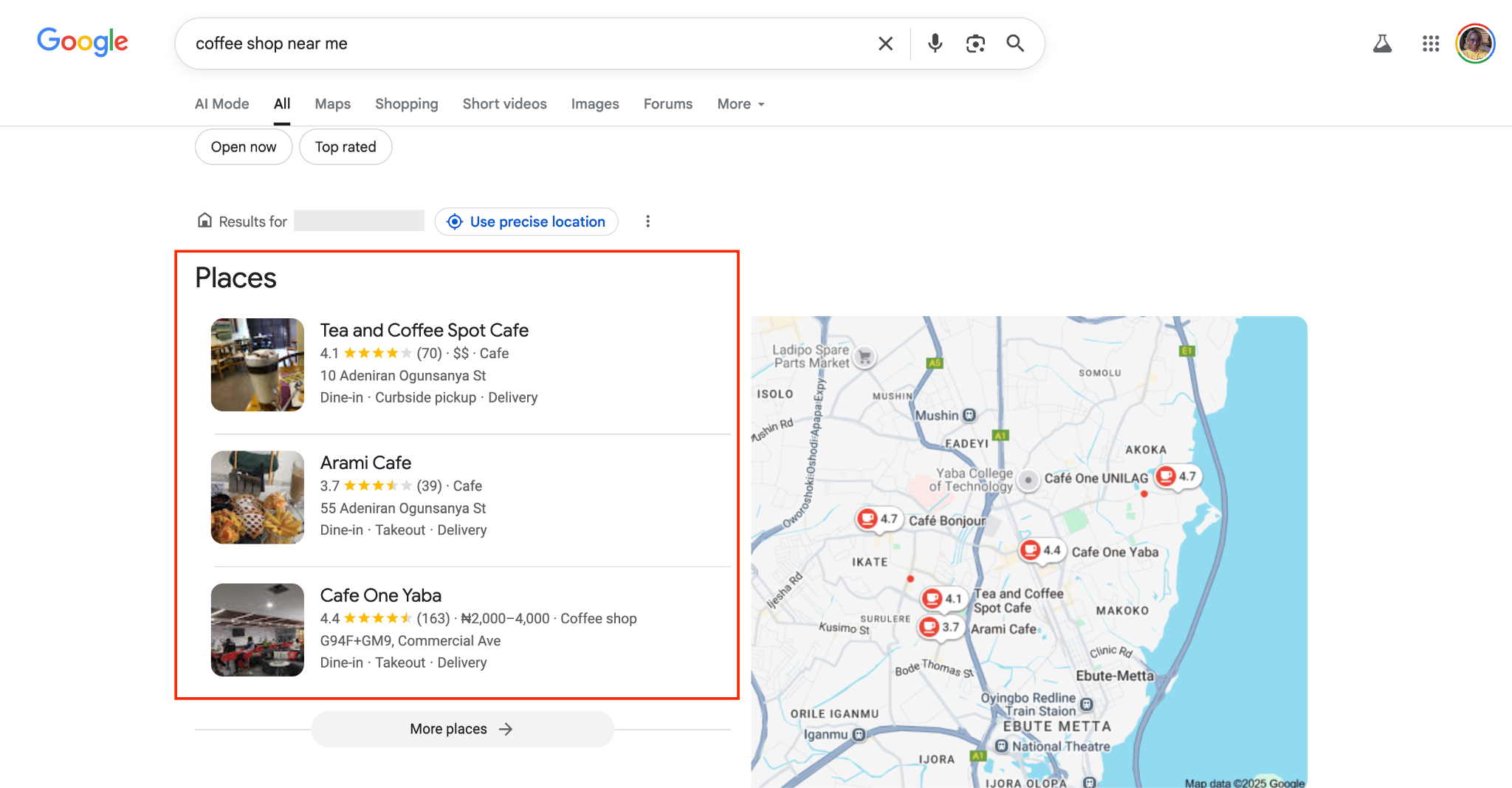
If you search “coffee shop near me”, the top results you see are optimized for local SEO. They use location-based keywords, customer reviews, and Google Business Profiles to appear in nearby searches.
👉Hire a Local SEO Expert in 2025
The rise of AI-driven SEO
With the rise of AI and new search technologies, two newer variations of SEO are becoming more common:
- GEO (Generative Engine Optimization)
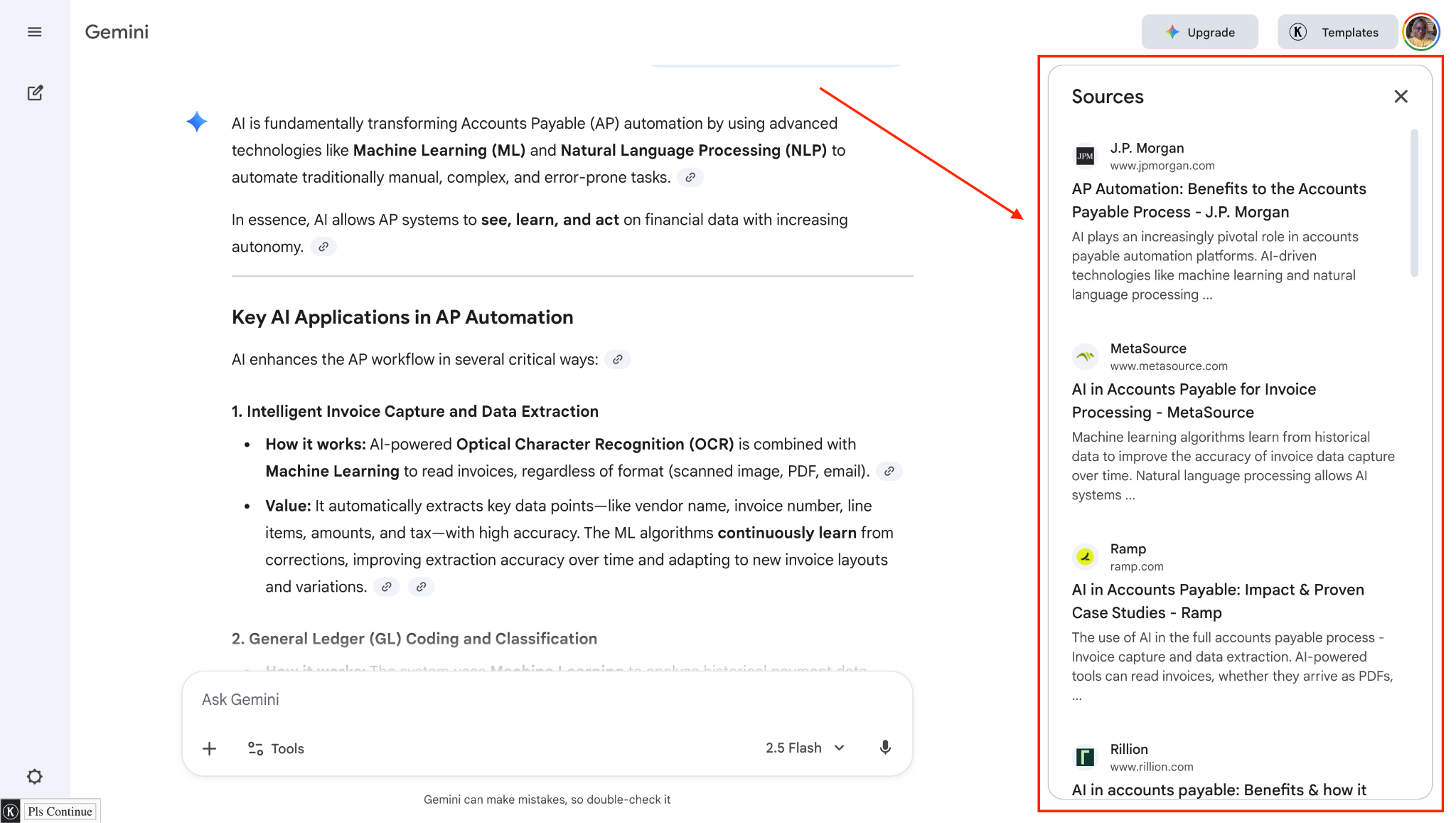
GEO focuses on helping your content appear in AI-generated responses from tools like Google’s Gemini or ChatGPT’s browsing model. It’s about structuring your SEO content so AI systems can understand and summarize it accurately.
For example, if someone asks an AI tool “how does AI work in AP automation”, your article might appear as part of the generated answer if it’s optimized for GEO. Like so:
- AEO (Answer Engine Optimization)
AEO targets voice and AI-based search engines that provide direct answers instead of showing a list of links.
For instance, if a user asks, “What is PPC advertising?”, and your content gives a clear, structured explanation, the system may pull your answer directly. It’s all about creating content that’s easy for these engines to interpret and deliver quickly.
Why SEO matters
Businesses today combine these SEO methods (on-page, off-page, technical, local, GEO, and AEO) to strengthen their digital marketing strategy. When done right, SEO helps you drive traffic, build brand trust, and grow your online visibility without depending entirely on ads. It’s a long-term strategy that fuels steady, sustainable growth.
What is PPC?
PPC (pay-per-click) advertising is a model where advertisers pay a fee each time someone clicks their ad. You’ll see PPC ads across major platforms like Google Ads, Bing Ads, and social channels like Facebook, Instagram, LinkedIn, and X (Twitter).
For example, if you look up “best keyword reseach tools” on Google, the result(s) with the small “Sponsored” label at the top of the page are examples of paid search campaigns. Those companies are paying to appear there, hoping you’ll click through to their website.
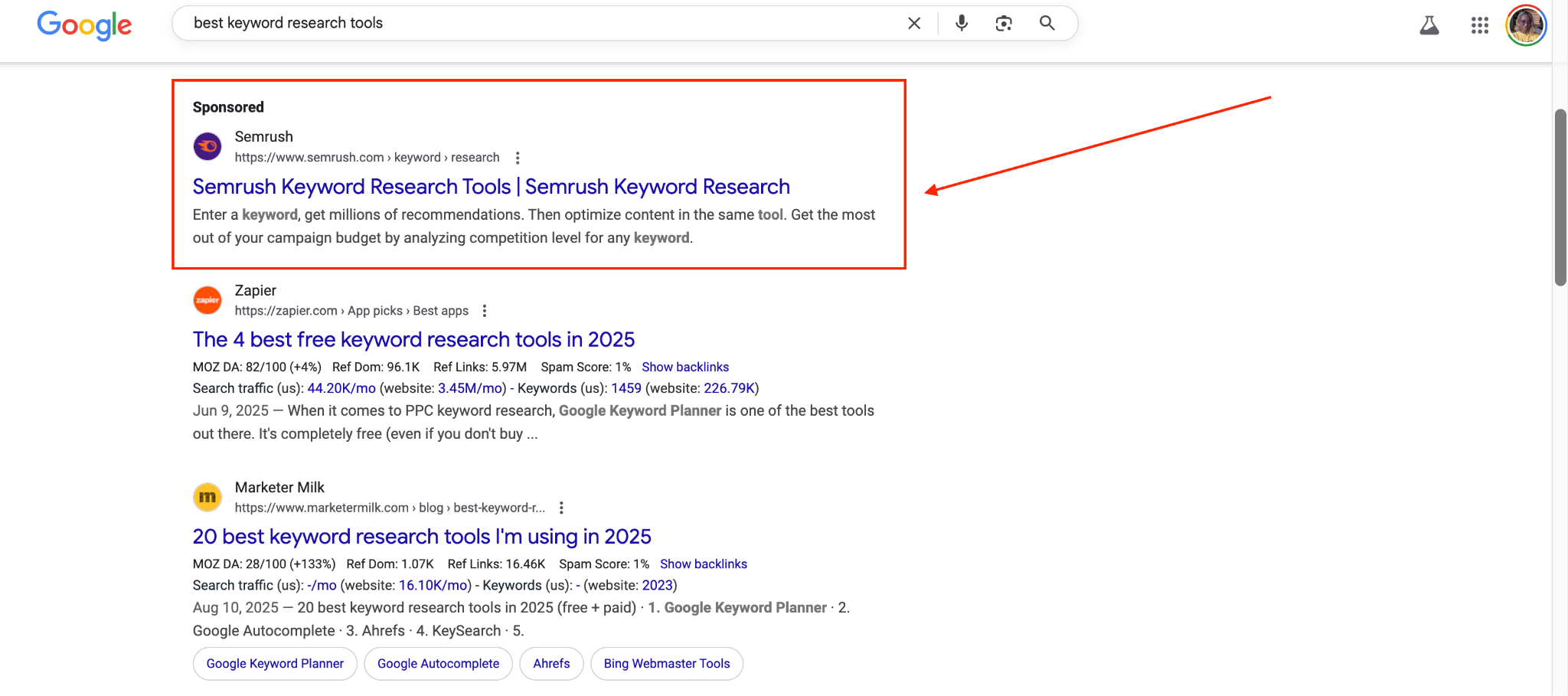
Here’s how it works: You pay per click, yes, but the amount you pay depends on the bidding process. When running a PPC ad, every advertiser competes for placement on specific search terms. The more valuable or highly competitive keywords are, the more you’ll pay per click.
So if ten businesses want their ad to show up when people search “marketing automation tools,” they each bid for that slot. Google’s system then decides who gets to appear based on bid amount, ad relevance, and landing page quality.
The biggest advantage of PPC advertising is immediate visibility.
The moment your PPC campaign goes live, your ad can appear right at the top of the Google search results. If your ad copy and keyword targeting are done right, you can start getting high-quality traffic to your site within hours. That makes PPC especially useful for startups or new businesses that want targeted traffic and can’t wait months for organic results from SEO.
But the results don’t last forever. The moment you stop funding your ad spend, your visibility disappears. It’s like turning off a light switch—the traffic stops almost immediately. That’s why many digital marketing strategies use PPC to bring in quick wins while waiting for SEO to gain traction.
Types of PPC ads
There are various types of PPC ads, but here are the most common ones:
1. Search ads
These are the most common form of PPC advertising. They appear on search engines like Google or Bing when users type in related search queries. For example, if you search “top email marketing tools”, you might see several ads at the top of the page promoting different software.
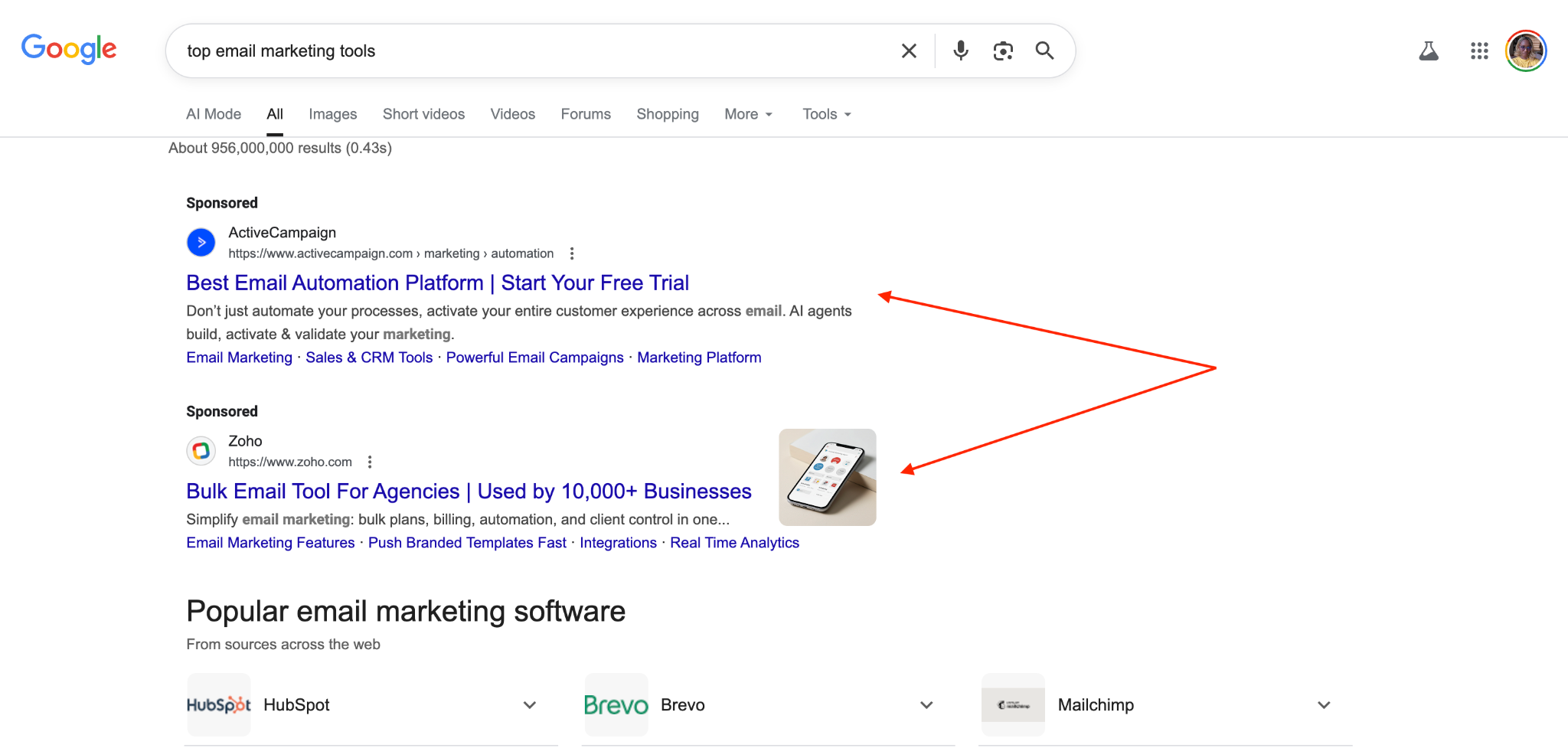
Search ads are designed to capture users’ intent at the exact moment they’re looking for something specific.
2. Display ads
Display ads show up across websites that are part of Google’s Display Network. They can be banners, images, or interactive graphics that promote your product or service. For instance, after browsing a hotel site, you might see an ad for that same hotel on a news website. That’s a display ad.
3. Video ads
Video ads appear on platforms like YouTube or other streaming sites. They can play before, during, or after a video. You can also find them in your video feed, like so:
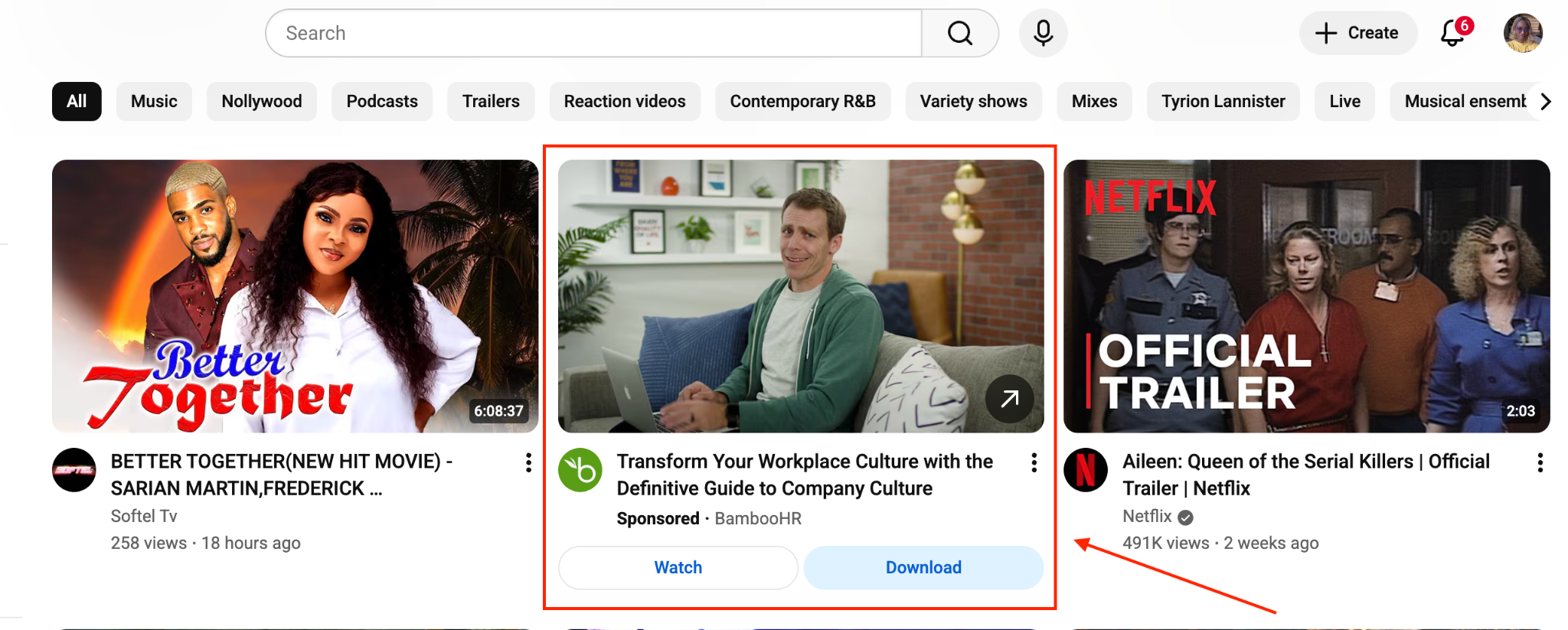
For instance, a brand might use a 15-second video ad to promote its latest product or share a customer testimonial.
Video ads are powerful because they combine visuals, sound, and storytelling to hold attention.
4. Social media ads
These ads appear on platforms like Facebook, Instagram, LinkedIn, or TikTok. They allow precise targeting based on demographics, interests, and behavior. For example, if you run an online fitness brand, you can show your ad (could be image or video-based) to users interested in “home workouts” or “healthy meal plans.”
Social ads are great for driving awareness and engagement within specific communities.
5. Shopping ads
Shopping ads are product-based ads that appear at the top of search results when someone looks for a specific item. For example, searching “running shoes” on Google often shows a carousel of products with images, prices, and store names.
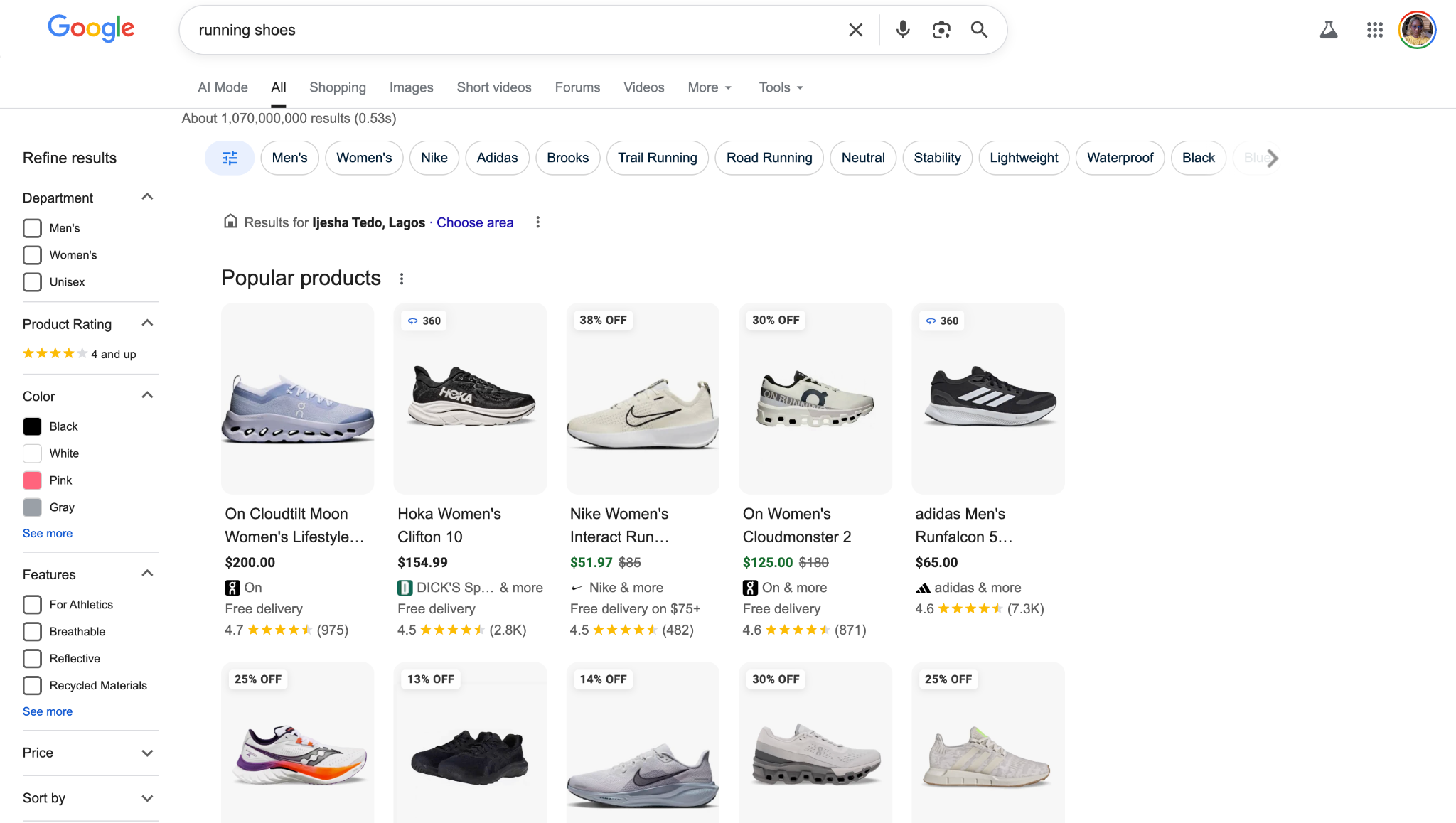
These ads help users compare options quickly and make purchase decisions right from the paid search results.
6. Remarketing ads
Remarketing (or retargeting) ads remind users about a product or service they viewed earlier. For instance, if you visited an online store but didn’t buy anything, you might see that same product advertised later on another site or social feed.
These ads help businesses re-engage potential customers who already showed interest but haven’t converted yet.
PPC and SEO work in tandem
PPC and SEO aren’t opposites. In fact, they often work best together.
For instance, you need to do keyword research to set up an effective PPC campaign. Understanding how people search and what phrases they use helps refine your ad targeting, improve PPC ad copy, and create stronger landing pages.
So, if you’re hiring someone to set up or manage your PPC marketing, they should also understand on-page SEO and search intent. That mix of skills ensures your ads reach the right audience, convert effectively, and make the most of your marketing budget.
Read: Outsource PPC: How To Find and Work With PPC Management Services
SEO vs. PPC: Head-to-head comparison
Now that you understand how SEO and PPC work on their own, let’s see how they stack up against each other.
When to use SEO, PPC, or both
Choosing between SEO or PPC depends on what you’re trying to achieve and how quickly you want results. Both can help your business grow, but they shine in different situations.
When to use SEO
SEO works best when you want to build something sustainable. If your goal is to attract people over time through valuable content, this is your route.
Use SEO when:
- You want consistent, lasting growth. SEO keeps driving traffic months after your content goes live. It’s ideal if you’re focused on organic results rather than quick wins.
- You’re building brand authority. High search rankings make your brand look credible. People trust businesses that appear naturally in organic search more than those that rely only on ads.
- You have a long sales cycle. If your buyers take time to research before purchasing, SEO helps you stay visible across every stage of their journey.
- You want to reduce paid dependency. SEO gives you compounding returns. Once your pages start ranking, they bring in qualified traffic without ongoing ad spend.
- You have time to invest. Since SEO requires patience, resources, and regular optimization, it’s perfect if you can afford to play the long game.
When to use PPC
PPC shines when you need fast results. If you’re launching a new product, hosting a promotion, or testing a new market, PPC advertising helps you get traffic instantly.
Use PPC when:
- You’re running time-sensitive campaigns. Running PPC campaigns for events, sales, or new product launches ensures your offer reaches people fast.
- You want to test the market. You can use PPC strategies to test headlines, ad copy, and offers before committing to a full SEO content plan.
- You need fast customer acquisition. For startups that can’t wait for SEO results, PPC marketing can start generating leads or sales right away.
- You have a clear budget and conversion goal. PPC works best when you know your numbers: how much you can spend and what each lead/sale is worth.
- You want control and precision. With paid ads, you decide your target audience, bids, and web pages, giving you more control over your marketing strategies.
When to use both SEO and PPC
Combining SEO and PPC lets you get the best of both worlds: fast traction and long-term stability.
Use both when:
- You want to balance short-term and long-term growth. PPC can drive instant leads while SEO builds steady organic traffic in the background.
- You’re optimizing your keyword strategy. You can use paid search campaigns to test keyword selection, then feed that data into your SEO and content plan.
- You want to dominate the search results. Appearing in both paid search and organic rankings makes your brand look stronger and can increase clicks.
- You’re managing a flexible budget. Some companies start with heavier PPC spending, then gradually shift more of their budget into SEO as organic performance grows.
- You want data-driven insights. PPC and SEO together reveal how users interact with different pages and search terms, helping you refine both channels over time.
The bottom line: Use PPC when you need quick wins, SEO for sustainable growth, and both when you’re ready to scale.
Read: 7 Best PPC Agencies to Maximize Your Ads in 2025
Common mistakes to avoid when using SEO or PPC
Both SEO and PPC can fail if not managed well. The good news? Most mistakes are preventable once you know what to look for.
Common mistakes to avoid when using SEO
Here are some common mistakes businesses make with SEO:
- Publishing thin or low-quality content. Google rewards quality content that’s helpful and relevant. Copying other people’s or stuffing pages with too many keywords hurts your rankings instead of helping them.
- Ignoring technical SEO. Slow loading speeds, broken links, or poor site structure confuse search engines and frustrate users. Fixing these technical issues improves your search rankings and keeps users engaged.
- Skipping mobile optimization. Most users search from mobile devices. So, if your site isn’t responsive, it can push you down the Google search engine results and drive potential customers away.
- Focusing only on keywords, not intent. Keyword research is important, but understanding what users actually want matters more. Therefore, target long tail keywords that match your audience’s real questions.
- Neglecting internal linking. Internal links help Google understand your content and make it easier for visitors to navigate your site. So, not adding links internally means you’re missing an opportunities to strengthen your on-page SEO.
- Failing to update content. Outdated information or broken links make your site look inactive, which hurts your organic results. So, update your content (especially blogs) and fix any broken links regularly.
- Ignoring analytics and testing. Without tracking results, you can’t tell what’s working. Review your organic search rankings, conversions, organic traffic, and bounce rates to guide future improvements.
Common mistakes to avoid when using PPC
PPC can deliver results fast, but it can also waste money just as quickly if you’re not careful. Here are common PPC advertising mistakes to steer clear of:
- Overbidding on low-intent keywords. Spending too much on search terms that don’t convert drains your ad spend. Focus on keywords that attract qualified traffic, not just clicks.
- Neglecting your landing pages. Even the best ad copy can’t save a poorly structured landing page. So, make sure your pages load fast, look trustworthy, and clearly guide users to take action.
- Forgetting to test your ads. Running the same ad copy for months leads to ad fatigue. Test headlines, visuals, and calls to action regularly to keep performance high.
- Ignoring negative keywords. Not adding negative keywords means your ads might appear for irrelevant search queries, which wastes impressions and clicks.
- Setting and forgetting campaigns. Running PPC campaigns without optimization leads to lower returns. So, keep an eye on CTRs, conversion rates, and bidding process changes.
- Neglecting conversion tracking. Without proper tracking, it’s hard to tell which ads drive sales or leads. Every effective marketing campaign should measure ROI from the start.
- Using one-size-fits-all targeting. Every target audience behaves differently. Refine your targeting by device, location, and intent instead of relying on broad PPC platform settings.
Avoiding these mistakes not only saves money but also strengthens both your SEO and PPC performance over time.
When to use MarketerHire to hire an SEO or PPC expert
Setting up an effective SEO or PPC campaign takes specialized expertise. From choosing the right keywords to optimizing web pages and managing ad spend, these channels need people who’ve done it before—and done it well.
If you don’t want to spend months searching, interviewing, and testing candidates, MarketerHire makes the process simple. We connect you with a pool of pre-vetted marketing experts, including SEO marketers and PPC specialists, so you can start working with the right person in as little as 3–5 days.
Here’s when choosing MarketerHire is the smartest move:
- You want to scale without hiring full-time staff.
Whether you’re expanding your digital marketing strategy or testing new marketing campaigns, you can bring in expert help without committing to a long-term hire. It’s a flexible way to grow at your own pace.
- You need expert execution.
If you’re launching a paid search campaign, running detailed SEO audits, or setting up PPC ads across multiple major platforms, you’ll get access to proven specialists who know how to drive results and avoid costly mistakes.
- You want flexibility.
Your business needs evolve. One month, you might need an SEO strategist to improve organic traffic; the next, a PPC marketer to manage your paid search campaigns. With MarketerHire, you can shift between experts easily without getting locked into long-term contracts.
Working with MarketerHire means you get speed, flexibility, and proven talent, all while saving significant resources that would otherwise go into hiring and training.
The bottom line
Both SEO and PPC can transform your marketing when used the right way.
SEO builds trust, authority, and steady organic traffic over time, while PPC brings immediate visibility and fast results. The best approach depends on your goals, budget, and how quickly you need to see impact. Many businesses use both, balancing long-term growth with short-term performance.
But building and managing these channels takes real expertise. MarketerHire can provide that.
We can match you with a proven SEO or PPC expert in 48 hours or less, so you can start working together within 3–5 days. Every engagement begins with a two-week free trial to ensure the fit is right. Most clients stick with the first expert we match them with, but if it’s not a match, we’ll rematch you quickly and at no cost.
With MarketerHire, you skip the endless hiring cycle and get straight to results, guided by experts who know how to scale, optimize, and grow.
Ready to find your next SEO or PPC expert? Hire through MarketerHire today.
