
- Template item
You're likely drowning in data. Campaign reports, audience metrics, content marketing dashboards… it’s a lot. And still, half the time you’re making gut calls because there’s no time (or bandwidth) to dig through it all.
That’s where AI actually earns its place. AI tools today can do things like:
- Identify which campaigns are underperforming (and why)
- Match copywriting to audience behavior
- Predict customer churn before it happens
This isn’t just happening at the enterprise level. Startups, DTC brands, and lean marketing teams are already folding AI into everyday workflows.
In this guide, we’ll unpack what AI in marketing really means today and how you can put it to work across your marketing strategy. We’ll also talk about what slows down AI adoption—and why that’s exactly when you bring in a proven expert.
What is AI in marketing?

At its simplest, AI in marketing means using software that can learn from data to enhance and automate digital marketing processes. It's aimed at augmenting human marketers with machine intelligence.
Think of it like this: instead of manually analyzing a spreadsheet of ad campaign results, AI spots patterns for you. Instead of guessing what offer to show a website visitor, AI personalizes it in real time based on their behavior. Instead of starting every email from scratch, AI gives you a smart first draft.
Rather than replacing the creative and strategic thinking humans bring, AI technology works alongside teams to handle the grunt work.
Benefits of using artificial intelligence in marketing
Improved efficiency and productivity
AI marketing tools work at superhuman speed. For instance, AI writing assistants can draft marketing copy several times faster than a human. Routine tasks that used to bog down your team can be handled in the background, allowing you to focus on strategy and creativity. The result is leaner teams that accomplish more. In fact, marketing teams using AI tools have seen around 30% increases in efficiency on average.
Enhanced creativity and idea generation
Instead of starting from scratch, marketers can use LLMs like ChatGPT to generate headline variations, draft copy, or explore different angles in seconds. Like so:

Visual tools like Midjourney can produce quick concept mockups to guide design direction. This frees you from blank-page paralysis and opens up more room to experiment. You get more ideas faster and can focus on shaping the best ones into effective marketing campaigns.
Personalization and better customer experience
AI can process behavioral data across sessions, channels, and devices to uncover patterns you’d likely miss. Like which content format drives higher AOV among returning users. Or, which sequence of touchpoints leads to churn.
Suddenly, you’re not just sending “relevant” content—you’re delivering timing-, context-, and intent-driven experiences. Think: product recommendations based on affinity clusters, dynamically populated email modules tailored to micro-behaviors, or homepages that adapt in real time based on browsing history.
Data-driven decisions and higher ROI
AI helps you make marketing decisions based on real data. For instance, AI might analyze a multi-channel campaign and tell you which marketing touchpoints are actually driving the most sales. It predicts outcomes too: AI predictive models can identify which leads are most likely to convert or how much revenue a campaign might generate, so you allocate budget more effectively. And because AI uses both past data and real-time performance, it can guide decisions like who to target, how much to spend, and what content to push.
20 ways to use AI in marketing
1. Build real customer segments from real behavior
Instead of guessing who your customers are, let AI group them based on what they do. That includes how often they buy, what content they engage with, how long they stick around, and which features they use.
Tools like Segment or Glew track behavioral patterns across your customer base and sort users into clear groups: discount-driven first-time buyers, quarterly loyalists, or lapsed users who only respond to email, for example. From here, you can develop personas tied to real behavior patterns. That might mean replacing “Accounting Adam” with a segment defined by product usage frequency or onboarding drop-off.

As behaviors shift, these groups evolve automatically, keeping your campaigns relevant.
2. Personalize experiences and trigger next-best actions in real time
AI tools like Dynamic Yield and ConvertFlow let you adjust your website based on referral source, visit history, or session patterns. For example, if a visitor lands on your pricing page but hesitates, you might show them a relevant testimonial. If they’ve read a blog and come back, you could surface a case study.
Beyond the website, AI orchestration tools can trigger the next step automatically—like sending a follow-up email or changing the homepage CTA—based on what the user seems ready for. The experience evolves as the customer moves, without needing rigid funnel stages or hand-coded rules.
3. Create AI-forward marketing strategies and campaigns
AI can help you decide where to focus before you launch anything. Tools like Pattern89 and Albert analyze your previous campaigns, competitor behavior, and market signals, then give you practical direction: which channels are worth your time, which formats are gaining traction, and where your audience is getting fatigued.
Once your campaign is live, the system can reallocate budget, pause weak assets, and highlight what’s gaining traction—all without your input.
Read More: 4 Generative AI Workflows for Account Based Marketing
4. Score leads based on intent, not just profile data
Your CRM might be packed with leads that look promising, but never engage. Instead of relying on job titles or company size alone, AI-powered lead scoring tools help you focus on who’s actually interested.
These tools analyze behavior across your website, emails, ads, and CRM to spot patterns—like return visits, time spent on key pages, or interactions with high-value content. That way, you can identify early buying signals before someone fills out a form or requests a demo.
This creates two benefits: sales can focus on the right people to speed up outreach, and marketing gets a clearer view of campaigns driving real pipeline.
5. Automate product recommendations and cross-selling
You don’t have to guess what your customers want next—AI can do it for you.
Tools like Algolia Recommend and Dynamic Yield look at things like browsing habits, cart behavior, time of day, and even how someone moves through your site to figure out what products to suggest.
If someone adds hiking boots to their cart, the system might recommend moisture-wicking socks or trail snacks. This isn't because they’re in the same category, but because they’re commonly bought together by similar shoppers.
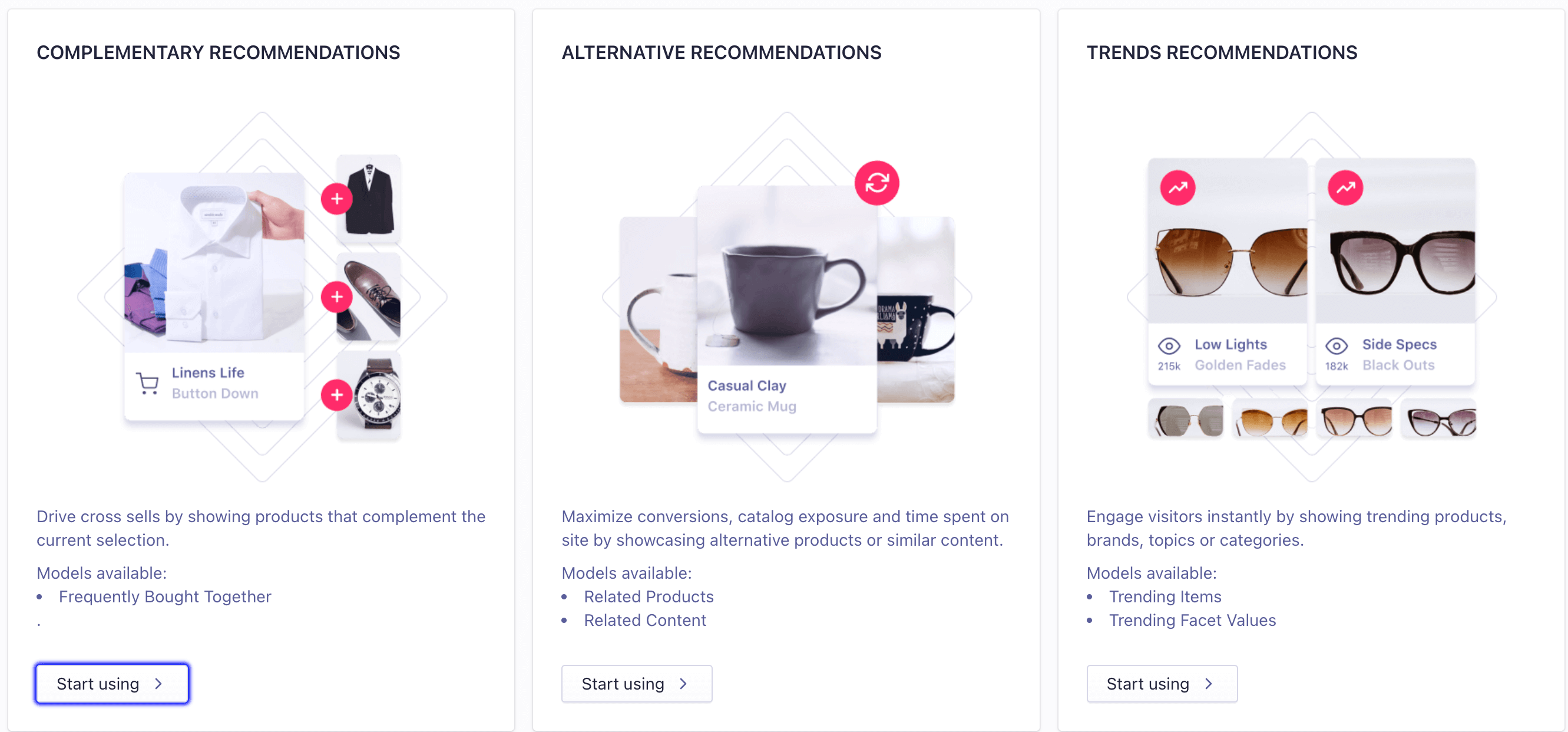
You can also use it for upsells and bundles. For subscription businesses, AI can predict which add-ons improve retention. For marketplaces, it can tailor cross-sell offers by user segment to boost revenue.
6. Deploy AI-powered chatbots to guide users in real time
Modern AI chatbots are less about scripted responses and more about real-time decision trees. They understand context, infer intent, and move users forward—toward checkout, toward booking a call, or toward your best content.
If you’re in B2C, that might mean using a chatbot to recommend products based on someone’s recent browsing. If you’re in B2B, it could mean qualifying leads in real-time and pushing the right ones to your CRM.
With generative AI, your chatbot can even hold natural conversations, helping visitors while they’re engaged and moving them toward the next step.
7. Analyze drop-off points across the customer journey
Instead of analyzing touchpoints in isolation, AI tools map out behavior across sessions, channels, and time. You can see exactly where customer engagement starts to fade—maybe trial users who come from webinars churn faster, or users who skip onboarding tutorials are less likely to upgrade.
These patterns are easy to miss when you’re looking at static reports. AI finds them by analyzing how behavior unfolds over time.
With that insight, you can fix the weak spots in your flow—what users see, when they see it, and how they move forward—so it’s not just the message that changes, but the experience itself.
8. Generate working drafts and scale production efficiently
If you’re creating content regularly (product updates, onboarding emails, blog intros), ChatGPT and Jasper can help you start faster.
Simply input a topic, prompt, or structure, and you can generate usable material with clear takeaways. The idea isn't to publish AI-powered content unedited, but to get unstuck and have options you can refine. This becomes especially useful when your team is producing high volumes of content across formats and channels.
9. Refine AI on high-performing brand content to improve output quality
Generic AI outputs often sound generic because the model has no context. But when you train it on your own top-performing content (e.g., ads with the highest ROAS, emails with above-average open rates), it starts to reflect your tone, structure, and strategic thinking.
This turns AI into a scalable content assistant. Instead of rewriting everything from scratch, you’re using it to generate copy that aligns with what’s already worked for your brand. Use this to maintain quality while increasing volume—without burning out your creative team.
10. Keep messaging consistent across your entire content ecosystem
When positioning shifts or a feature changes, the last thing you want is a six-week delay updating all assets. AI helps speed up this process across web, email, sales collateral, and internal docs.
You can set up automated scans to detect outdated language, flag inconsistencies in tone, or even generate new copy based on updated messaging. Instead of bottlenecks between teams, content updates happen faster and more accurately.
Read More: 6 Best AI SEO Agencies in 2025
11. Audit and prioritize content strategy based on actual performance
AI lets you systematically assess what content is outdated, underperforming, duplicated, or missing altogether.
With the right models, you can score content based on engagement, conversion metrics, and topic overlap. You’ll spot gaps in your funnel coverage and learn where you're oversaturated. You can also get suggestions for what to create next, complete with outlines to kickstart production.
12. Perform AI-enhanced A/B tests and CRO
You can test multiple elements at once—images, buttons, CTAs, messaging—and let AI figure out what drives results.
Tools like Optimizely and VWO automatically shift traffic to the top-performing version in real time. Some, like Airbnb’s system, can even tweak layouts mid-session based on customer interactions with the page.
Over time, it also learns what works best for different types of users, like first-time visitors vs. returning customers, so you can personalize experiences at scale.
13. Optimize ad performance by combining platform AI with your inputs
AI marketing platforms like Meta Advantage+ and Google Performance Max already leverage AI to handle placements, bidding, and targeting. But they still rely on the inputs you give them. If you want stronger results, focus on supplying better creative and clearer goals.
Tools like Madgicx and Revealbot make this easier by testing different combinations (images, headlines, copy) and automatically adjusting based on who’s clicking and when. You’re not stuck manually tweaking settings anymore. Instead, you’re guiding the system by giving it stronger creative and more accurate data.

14. Scale marketing content distribution across formats and channels
Once a long-form piece is published, AI can take that original blog and rework it into a range of assets: a short social media post, a newsletter intro, a product walkthrough script. Each version is tailored to its medium, not just shortened.
This saves time and reduces dependency on multiple creators. More importantly, it keeps your core message consistent while extending its reach.
15. Analyze qualitative feedback at scale
AI tools like Thematic and Chattermill help you extract patterns from unstructured feedback at scale. You can see exactly what’s driving positive or negative sentiment, how often specific issues are mentioned, and what users say about features, pricing, or onboarding.
Instead of drowning in text, you get summaries like “40% of detractors mentioned unclear pricing” or “Most promoters praised the setup experience.” Use these actionable insights after product launches, for NPS or churn analysis, or during roadmap planning to bring clarity to customer feedback and boost customer satisfaction.
16. Track brand conversations across platforms
You’re not always tagged when people talk about your brand. AI-powered listening tools help you track those conversations anyway—on social media, in forums, blogs, review sites, and even in images where your logo appears.
Platforms like Brand24 and YouScan can detect sentiment, visual mentions (like logo usage), and even tone shifts over time. This helps you spot market trends early: rising complaints about a feature, sudden praise from an influencer, or a viral post you weren’t tagged in.
17. Select influencers based on audience quality and performance fit
With AI tools like HypeAuditor, you don’t have to guess which creators will work for your brand. You can see how engaged their audience is, how much overlap they have with your ideal customers, and how likely they are to drive results.
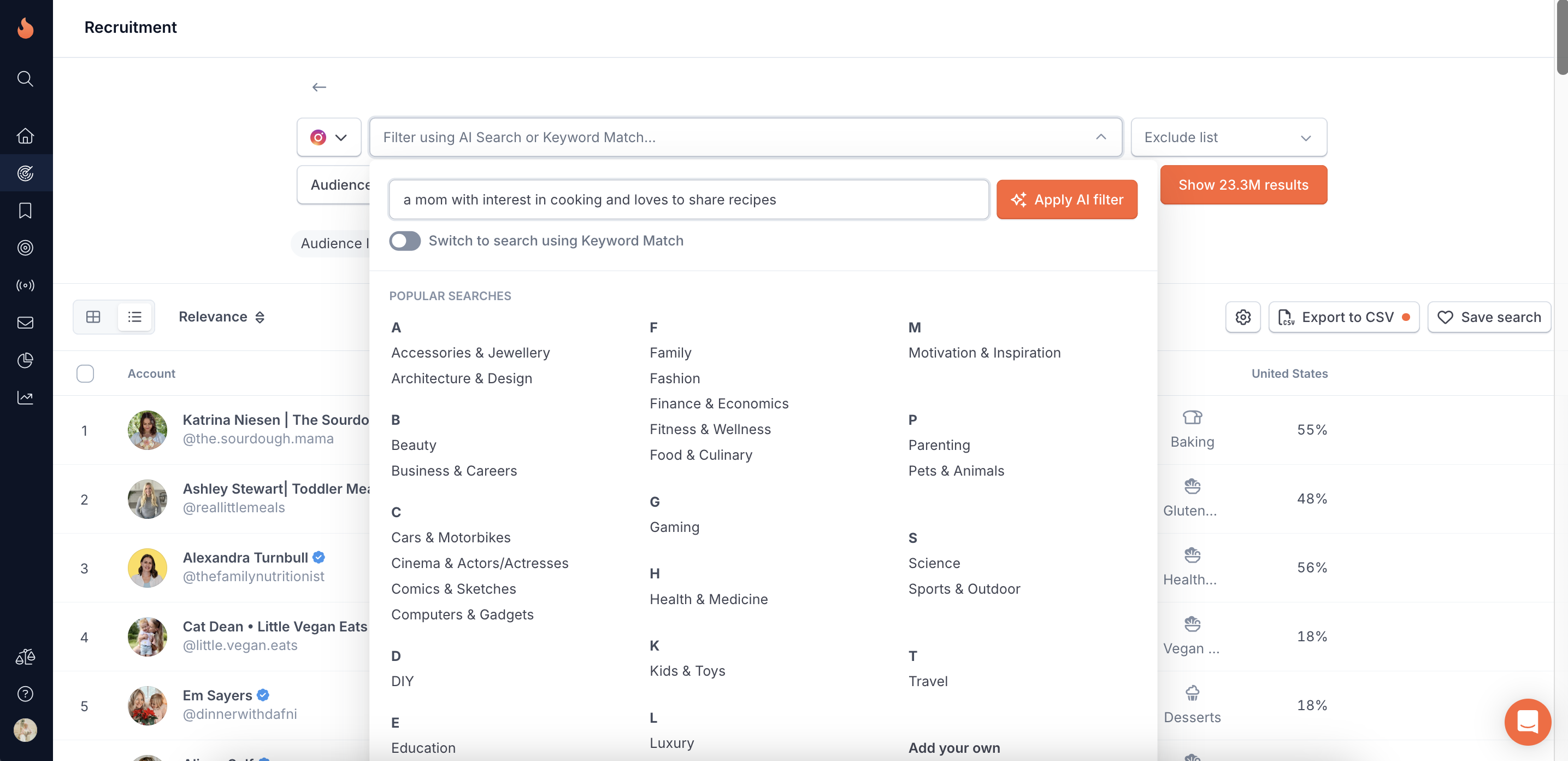
After launch, AI can also track performance and flag issues early. This helps you optimize the campaign while it’s still running.
18. Run creative simulations to reduce risk before launch
With integration, you can analyze historical data to identify which copy styles or formats typically resonate with a given audience. Some marketing orgs use AI to run simulations: Will this headline underperform? Does this CTA align with top-converting patterns? Others pre-screen creative for clarity, tone, and even brand alignment before routing to design.
It’s not about removing risk. It’s about making smarter bets. Use this in early-stage campaign planning to improve your odds before execution.
19. Integrate cross-functional data using AI to get shared insights
AI-powered connectors and data models can ingest customer data from each system, normalize it, and build a common layer of understanding. For example, you can track how a lifecycle campaign impacts product usage or how onboarding engagement correlates with pipeline velocity.
This improves collaboration across marketing, sales, and product teams—each can act on aligned metrics and data-driven insights.
20. Adjust pricing based on demand, competition, and inventory
AI platforms like PROS and Pricefx pull in data from your sales system, stock levels, and even outside factors like weather or traffic. If a product starts flying off the shelves, AI can raise the price slightly without slowing sales. If something’s not moving, it can discount just enough to trigger purchases before it turns into dead stock.
This removes the guesswork from pricing decisions and helps you move inventory while maximizing revenue. It’s especially useful during flash sales, seasonal shifts, or competitor disruptions when reacting quickly matters most.
Challenges of using AI in marketing
Not enough hands-on experience
Most marketers haven’t been trained to evaluate how a machine learning algorithm works or how to get meaningful output from AI. Without that knowledge, it’s easy to pick the wrong tool, interpret results incorrectly, or use a model in a way that backfires.
For example, a team might start using generative AI to write social copy, only to realize the tone is off or the messaging is misaligned. It’s not that the tool failed—it’s that no one on the team knew how to guide it properly.
Your data isn’t ready
Most AI tools depend on access to clean, organized, and complete data. But in reality, marketing data is usually scattered across platforms. CRMs, ad managers, marketing analytics dashboards—none of it connects neatly unless someone takes the time to set things up right.
If the data going into the tool is incomplete or low quality, the insights and outputs will be too. And unless someone on the team understands both the tech and the marketing goals, AI initiatives can stall before they even get off the ground.
Content gets weird
AI accelerates content creation, but that doesn’t mean it’s usable. Many marketers find that copy written by AI reads oddly, misses key details, or feels generic. Sometimes it even contradicts your brand voice or includes outdated information pulled from training data.
This happens when you execute an AI marketing strategy without enough oversight.
Privacy can't be an afterthought
AI tools often rely on personal data to do things like predict customer behavior or personalize campaigns. That brings up serious concerns about data privacy, regulation, and consent.
Even if the tool is legal to use, it can still feel intrusive to customers, especially if they don’t know how you got their information. And if your AI is trained on biased data, it might make decisions that are unfair or harmful.
The landscape moves too fast
There’s a flood of new AI tools, features, and frameworks being released every few months. It’s difficult for marketing teams to keep up, and even harder to know which tools are actually worth adopting.
What you chose six months ago might already feel outdated. What looked promising in a demo might not fit your marketing workflows. Staying current—and strategic—requires dedicated time and ongoing research, which most teams simply don’t have.
Read More: How Programmatic Recruitment Marketing Helps You Hire Faster and Smarter
How to hire an AI marketing expert
AI tools only work as well as the people guiding them. An experienced AI marketer can clean up your data, choose tools that actually fit your needs, and ensure your campaigns stay on-brand, compliant, and effective.
So, how do you find someone who understands marketing automation?
The fastest way: MarketerHire. It’s a talent platform built for marketers, with a vetted network of marketing professionals who specialize in AI strategy and execution. We can match you with someone who’s done it before—and done it well—whether it's figuring out where AI fits in your marketing stack or delivering accurate insights.
Plus, you don’t need to hire full-time. You can bring someone on short-term to get your existing systems in place, coach your team, or run specific marketing efforts. And because MarketerHire pre-screens every candidate, you skip the trial-and-error stage.
Hire an AI marketing professional through MarketerHire and get matched in as little as 48 hours.
