
- Template item
Many Shopify store owners start off thinking they can manage their online stores themselves. And at first, it feels doable: install an app, adjust a few meta tags, publish some blog posts, list some products, and make sales.
But it’s rarely that simple.
Without expert management, cracks start to show. The site slows down. Product pages compete with each other because of duplicate content. Google’s crawlers follow the wrong URLs. And search rankings barely budge, no matter how many apps you install.
Hiring a Shopify SEO expert changes that. In the age of AI-driven search, the difference between “just another store” and a Shopify storefront that dominates search engine results pages (SERPs) comes down to expertise.
In this article, I’ll cover:
- What a Shopify SEO expert does
- How Shopify SEO differs from other types of SEO
- The role of AI and LLM search in Shopify SEO
- How to choose the right Shopify SEO expert
What a Shopify SEO expert actually does

A Shopify SEO expert makes your Shopify website more visible to search engines so it attracts qualified traffic and drives sales. Their role includes:
- Running keyword research to improve category pages.
- Optimizing product images and meta tags to improve site speed and relevance.
- Restructuring internal linking so search engines can crawl your store effectively.
- Launching link-building campaigns that strengthen authority and improve search rankings.
- Monitoring conversion rates and refining product pages to turn traffic into sales.
Unlike general SEO services, this work requires technical expertise in how Shopify operates, including its templates, app ecosystem, and built-in limitations.
How Shopify SEO differs from other types of SEO
Shopify SEO follows the same core principles of search engine optimization, but there are some aspects of SEO that are unique to Shopify.
1. E-commerce focus
Service websites often have a few landing pages and/or blog posts. A Shopify store, on the other hand, may need to optimize dozens, or even thousands, of product pages. These pages often overlap, creating duplicate content across product variants and categories.
To rank in search engine results pages, Shopify SEO experts have to refine meta tags, structured data, and site architecture so that search engines can crawl the site without confusion.
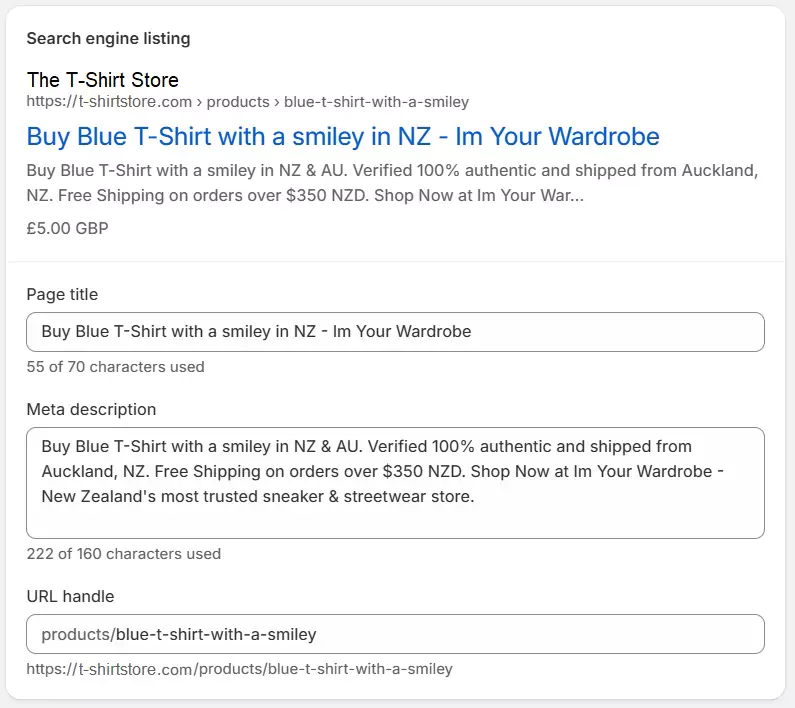
Shopify search listing settings for product titles, meta descriptions, and URLs. Source
2. Platform limits
Shopify businesses face structural limits that can affect SEO.
For example, the URL format is locked because you can’t remove “/products/” or “/collections/.” Canonical tags are auto-generated, and some themes make it difficult to apply custom technical SEO fixes. Even small changes, like renaming products or restructuring a collection, often require setting up redirects to avoid broken links.
A Shopify SEO expert pays close attention to site architecture and URL management. They know how to use redirects strategically to preserve search engine rankings and prevent traffic loss when URLs change.
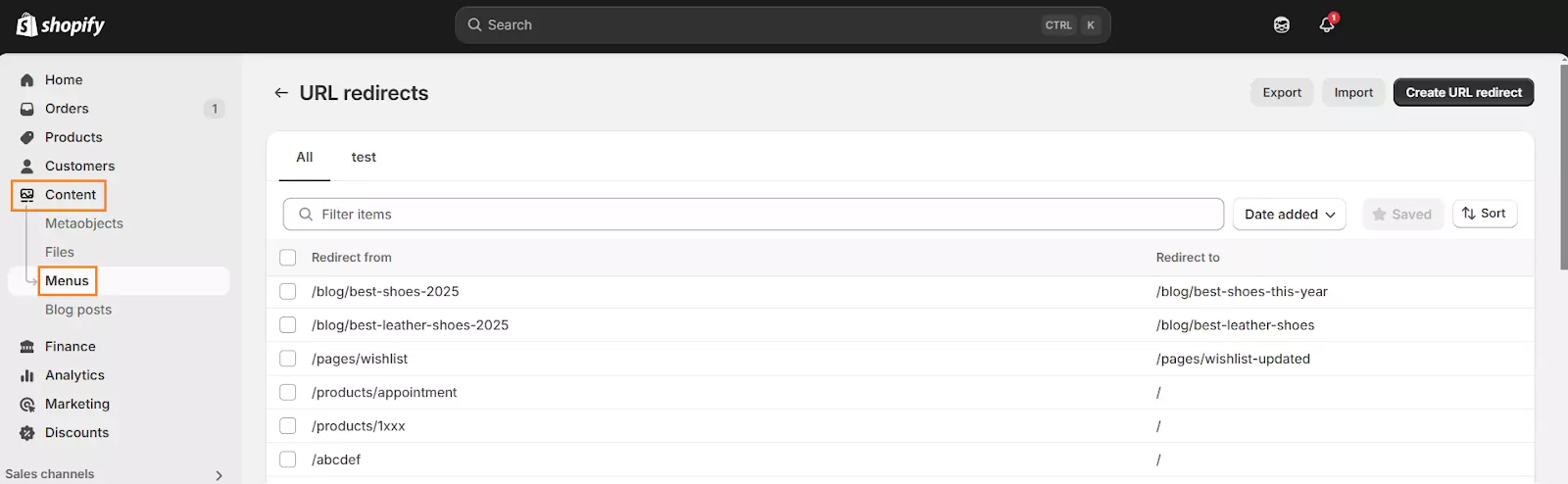
Without that expertise, your store risks losing visibility on Google and other search engines.
3. Conversion-focused SEO
With Shopify, rankings alone aren’t enough. The real goal is sales. That means every SEO campaign must go beyond visibility and focus on elements that drive conversions.
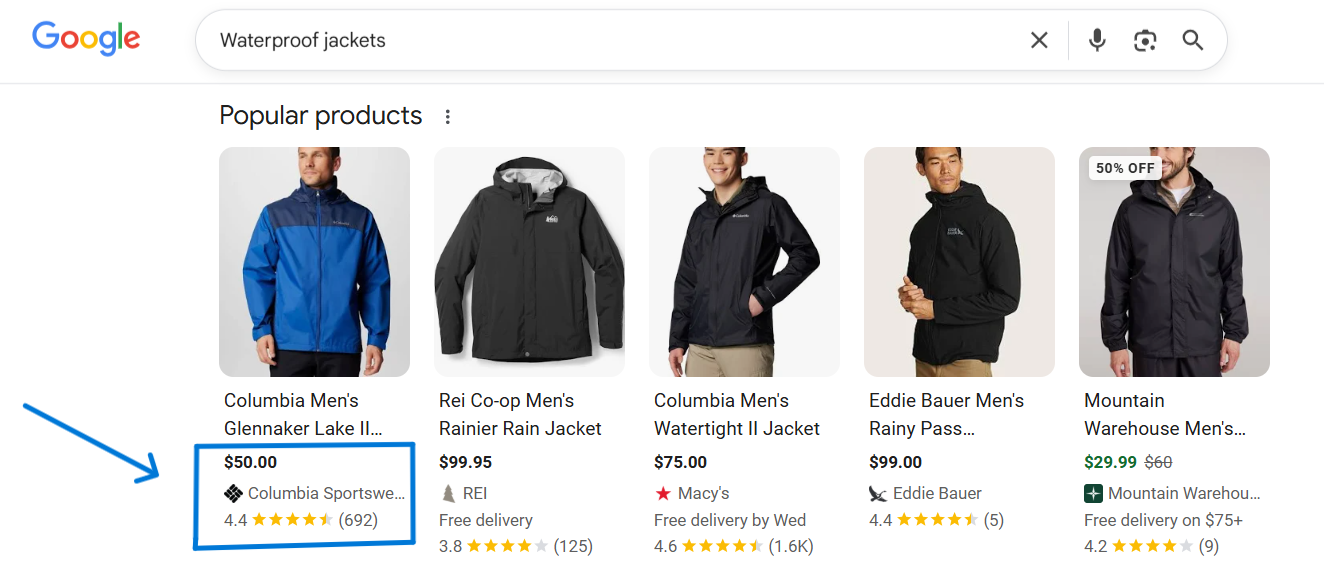
For instance, optimized product descriptions with relevant keywords make listings more discoverable and persuasive. Verified reviews and ratings build trust (as shown in Google’s product listings, where ratings and feedback influence clicks).
Internal links between category pages and product pages guide shoppers smoothly through the store, helping them find what they need faster.
4. Integration with apps and themes
A Shopify SEO service provider often has to fix problems caused by too many apps or bloated themes. While apps add features, they can slow site speed, which is major ranking factor.
As a result, the Shopify SEO expert has to balance website optimization, mobile optimization, and site audit fixes without sacrificing user experience.
5. Competition on the SERPs
E-commerce SEO is more competitive than regular SEO. Ranking a product page is harder than ranking a blog post or service page because dozens of online stores may sell the same product.
Therefore, winning requires targeted keyword research, high-quality link building, content creation, and consistent off-page optimization.
The Shopify SEO expert also has to create and execute a tailored Shopify SEO campaign that combines technical expertise with content marketing and structured data to drive results.
Read: How To Improve SEO On Shopify
The role of AI and LLM search in Shopify SEO
The way search engines work has changed a lot in the last 5-10 years.
Google’s Search Generative Experience (SGE) and Bing Copilot now deliver AI-generated answers before traditional search results. Instead of clicking through multiple websites, you see a summary at the top of the page with product recommendations, comparisons, and quick insights.
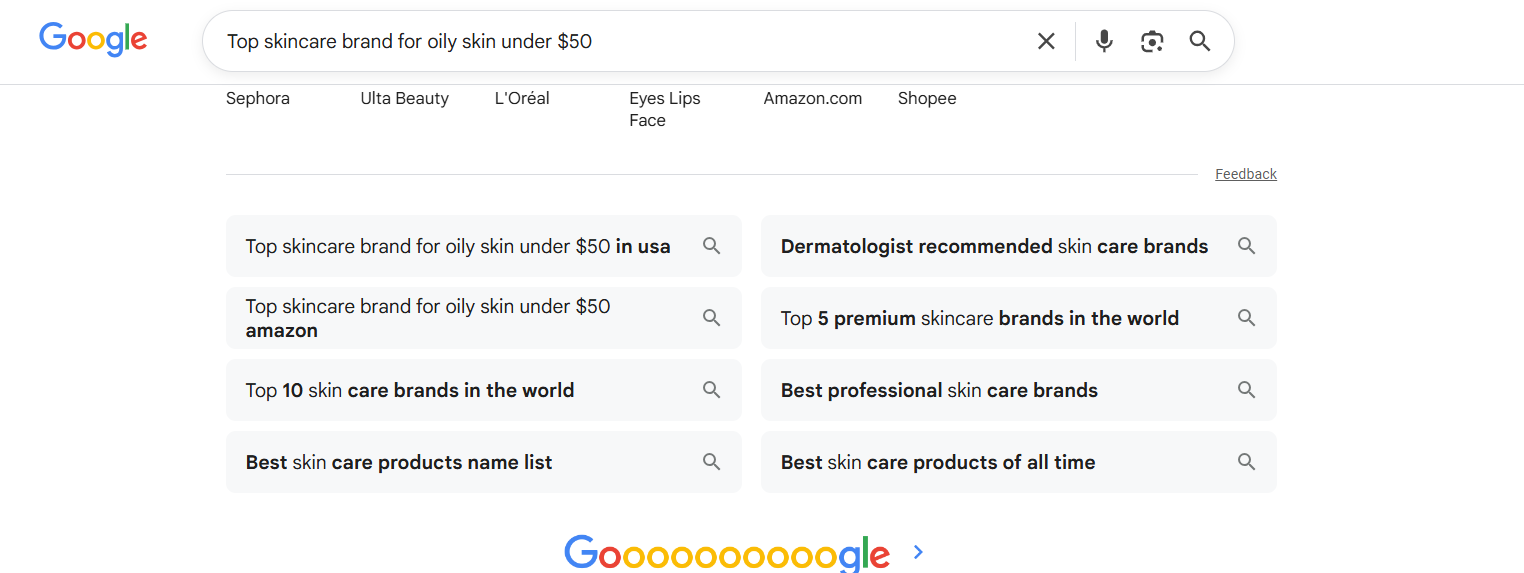
For example, when someone searches “Top skincare brand for oily skin under $50,” Google pulls information from multiple sources, like beauty magazines, dermatologist reviews, and product listings, then combines them into one AI-generated summary.
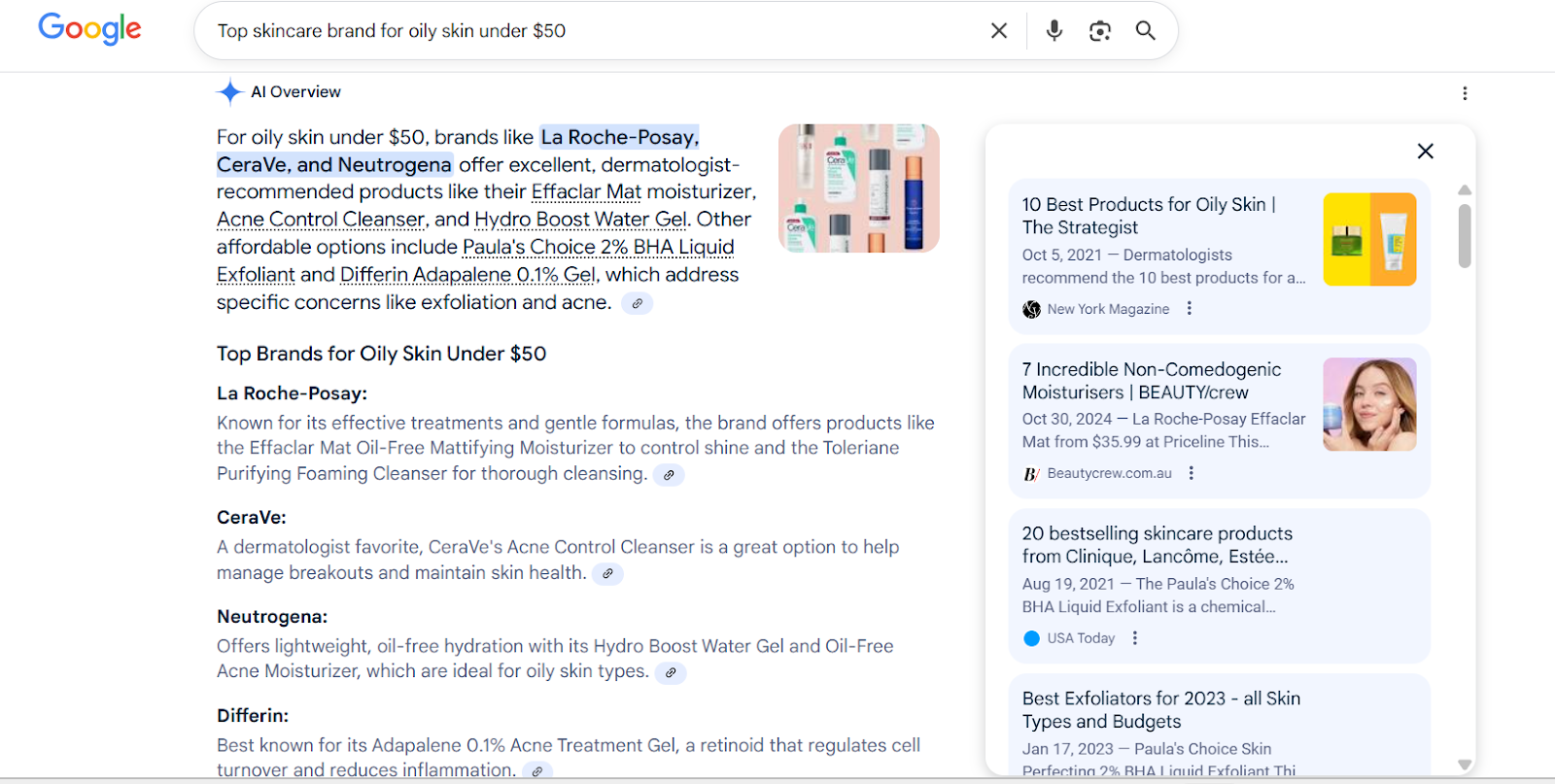
If your product pages lack structured data, optimized descriptions, and relevant content, they won’t be included when AI systems compile these types of answers.
Below is a breakdown of how AI and large language models (LLMs) influence search (and, by extension, Shopify SEO).
1. Structured data and content matter more than ever
AI systems depend on structured product data, FAQs, and clear on-page optimization to deliver accurate responses.
For Shopify SEO experts, this means adding schema markup to product pages so details like price, availability, and reviews are easy for search engines to read. It also means optimizing category pages with relevant keywords and writing precise meta tags that match what shoppers are actually searching for.
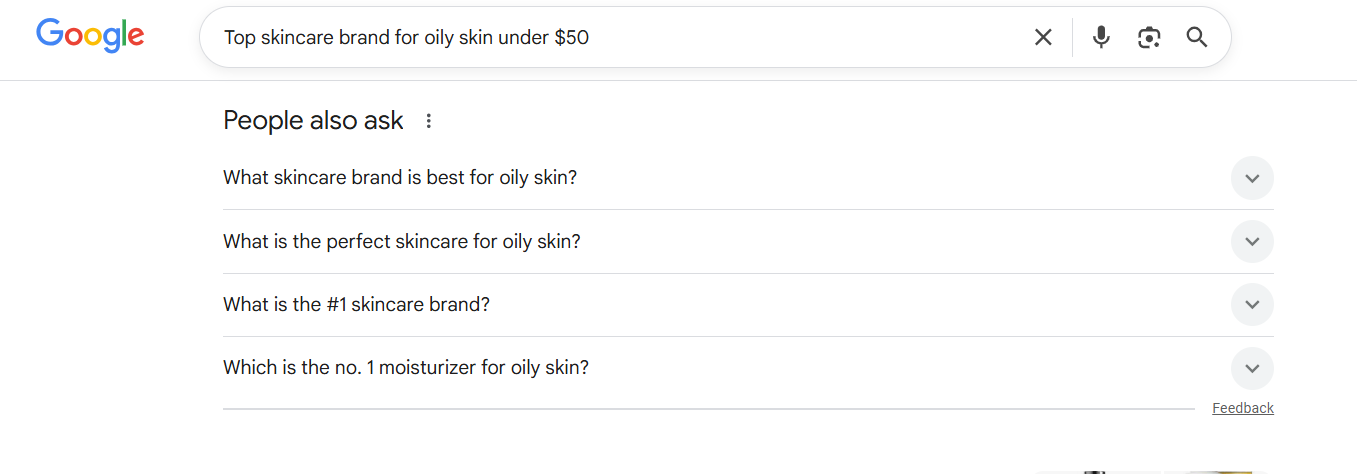
For example, the “People Also Ask” section in Google shows questions like “What skincare brand is best for oily skin?” or “Which is the no. 1 moisturizer for oily skin?” AI tools look for structured data and well-written content to answer these queries.
A Shopify store that invests in blog content, product FAQs, and optimized product pages is far more likely to be included in AI-generated recommendations.
2. AI as a tool for SEO experts
AI is becoming a powerful assistant for Shopify SEO companies. Tools like Semrush’s Keyword Clustering, SurferSEO’s Content Editor, or Ahrefs’ AI-driven competitor insights can speed up research and draft content outlines. But these tools are not a replacement for expertise.
A Shopify SEO services provider still needs to refine strategies, run site audits, and align campaigns with your business goals. Without human oversight, automation can create duplicate content or overlook major ranking factors such as site speed and conversion rates.
3. Authority and trust > keywords
AI-driven search now rewards brands that show real authority and trust. Both shoppers and search engines see through keyword stuffing, so repeating phrases in product descriptions won’t cut it anymore. What works is building topical authority with helpful content, earning trust with quality link building, and using structured data to back it all up.
When a Shopify SEO strategy shows expertise and delivers genuine value, it naturally rises above the competition in organic search.
Read: 6 Best AI SEO Agencies in 2025
Defining your Shopify SEO goals
Every Shopify SEO campaign should begin with clear, measurable goals. Without them, you risk spreading your SEO efforts thin across apps, quick fixes, and trial-and-error tactics.
Here are five goals that matter:
1. Getting the right traffic from search engines
Every store owner needs to get traffic to make sales. But not just any traffic.
For example, a Shopify store selling home office furniture doesn’t benefit much from showing up in searches for the word “chairs.” That term is too broad and pulls in people looking for dining chairs, folding chairs, or even gaming chairs.
The better goal is to attract visitors who are already searching with buying intent—queries like “ergonomic office chair with lumbar support” or “adjustable standing desk for small spaces.”
To achieve this, a Shopify SEO expert will conduct keyword research that targets buyers at the decision-making stage, and then optimize product pages, category pages, and blog content so the store ranks for those high-value searches.
2. Improve search engine rankings for relevant keywords
Showing up on page five of Google doesn’t help your store because shoppers rarely scroll that far. The goal should be to move into the top spots on page one, where most clicks and purchases happen.
A Shopify SEO expert knows how to make that shift.
They optimize product descriptions and category pages so they align with buyer intent, add structured data so your products are displayed correctly in search results, and build high-quality links that signal authority to search engines.
Together, these efforts strengthen your search engine rankings for the keywords that buyers are searching for.
3. Boost conversion rates and online sales
Let’s say your Shopify store gets 10,000 visits a month but only 1% of those visitors buy. That means 9,900 people leave without purchasing. By improving product descriptions, adding trust-building reviews, and applying conversion rate optimization (CRO) techniques like clearer calls-to-action or streamlined checkout, that 1% could climb to 2–3%.
It may sound like a small change, but the impact is big.
Doubling the conversion rate means doubling sales without needing to attract a single extra visitor. For most Shopify businesses, improving conversions is one of the fastest ways to grow revenue because it maximizes the traffic you already have.
4. Strengthen technical SEO and site architecture
A Shopify website with slow load times, duplicate content from product variants, or poor mobile optimization will struggle in organic search, even if its keyword targeting is on point. Addressing these issues should be a core goal for any Shopify business.
Improving crawlability ensures that Google and other search engines can properly index the store. This will not only improve its rankings but also deliver a faster, more reliable experience for customers.
5. Build long-term authority with content and links
If you run a Shopify store that sells coffee equipment, publishing helpful content like “How to Choose the Best Espresso Machine” or “French Press vs. Pour Over” positions your brand as a trusted guide, not just another seller. When shoppers find answers to their questions on your site, they’re more likely to come back when they’re ready to buy.
Pair that content with quality backlinks from coffee blogs, lifestyle sites, or media outlets, and the effect compounds.
Search engines view those links as trust signals, helping your store climb in the rankings. Over time, this combination of relevant content and strong links builds an online reputation that keeps organic traffic flowing steadily and reliably.
Read: 10 Best SEO Blog Writing Services in 2025
App vs. expert: What delivers more value?
Most Shopify store owners start with apps because they’re cheap, fast, and easy to install. They handle the basics, but sooner or later, you hit a wall.
When this happens, the question becomes: Do you keep stacking apps, or bring in a Shopify SEO expert who can build a tailored strategy for your store?
The smartest approach is to use both. Let apps handle routine automation, while a Shopify SEO expert focuses on strategy and execution. That balance avoids wasted work and creates a stronger foundation for long-term e-commerce growth.
Read: Outsource SEO: How to Find and Work With SEO Services in 2025
How to choose a Shopify SEO expert
Knowing what Shopify SEO skills matter is one thing; finding someone who actually has them is another. Here’s how to choose wisely:
1. Look for proven Shopify experience
Not every SEO freelancer or agency understands the quirks of a Shopify store, so experience matters. Ask for case studies that show how they’ve solved real problems, like fixing duplicate product pages, improving site speed, boosting conversion rates, or helping a store grow from point A to point B.
Concrete results, like steady organic traffic growth or higher rankings for product keywords, are the strongest proof that they can deliver.
2. Understand their SEO approach
A good Shopify SEO partner should be able to explain their process without using jargon. Ask how they handle technical SEO, content optimization, and link building.
- Can they resolve duplicate content issues from product variants?
- Do they know how to refine product descriptions and meta tags with the right keywords?
- Will they run structured data audits so your products display correctly in search results?
Their answers reveal whether they have the right SEO skills or are just speaking in generalities.
3. Confirm how they track results
Ask how the Shopify SEO expert measures success. The right partner will use tools like Google Analytics and Search Console to monitor keyword rankings, traffic, and conversions.
More importantly, they’ll explain the numbers in plain language and show how they connect to your goals, whether that’s higher sales, repeat customers, or stronger search visibility.
4. Check references for reliability and communication
Technical skills only go so far if the expert isn’t reliable. Look at past client reviews or ask for references to understand how they work.
- Were they responsive and consistent?
- Did they provide proactive recommendations instead of waiting for problems to surface?
- How well did they adapt when priorities or business needs changed?
The best Shopify SEO experts communicate clearly, share regular updates, and flag issues early, working as an extension of your team rather than an outside vendor.
Why you should use MarketerHire to find the right Shopify SEO expert
Finding the right Shopify SEO partner is often the toughest step. Agencies can feel bloated and expensive, while freelancers can be hit-or-miss.
MarketerHire, however, makes hiring easier by giving you access to pre-vetted senior SEO experts without long retainers or risky trial-and-error.
Here are some reasons to
1. Fast access to vetted Shopify SEO specialists
Instead of taking chances on random SEO companies, MarketerHire connects you with specialists who know Shopify’s platform inside and out. Each expert is vetted not only for technical SEO skills but also for their ability to optimize content and deliver measurable results for e-commerce stores.
2. No long-term contracts, flexible hiring
With MarketerHire, you don’t need to commit to year-long retainers. Instead, you can hire a Shopify SEO specialist for a single project, a campaign, or as a fractional hire. This flexibility allows you to align SEO goals with your store’s budget and objectives.
3. Experts who balance apps with strategy
MarketerHire experts don’t replace the tools you already use. Instead, they integrate apps where automation makes sense but still build a customized SEO strategy focused on long-term growth. You get efficiency without depending on shortcuts.
4. Aligned with business outcomes, not just rankings
When you hire a Shopify SEO partner through MarketerHire, every campaign they launch will be designed to increase your organic traffic, conversion rates, and store sales.
Your search rankings will improve, and so will your sales (and revenue). 12
Hire a Shopify SEO specialist through MarketerHire
Apps and plugins are good for quick fixes and small automations. But growth comes from strategy, not shortcuts. A Shopify SEO expert can redesign site architecture, align SEO with sales goals, and build a plan that drives steady traffic and higher conversions. That’s the kind of work no app can replace.
The challenge, however, is finding the right expert. MarketerHire takes care of that by matching you with vetted Shopify SEO specialists in as little as 48 hours. These experts have a track record of scaling Shopify-based businesses, and bring cutting-edge insights to the table.
And the best part is, you don’t have to commit on day one. Each hire begins with a two-week free trial. If it’s the right fit, you keep going. If not, we can match you with someone else at no cost.
If you’d like to know how MarketerHire can help you, reach out today.
